The Messianic return of the Bearded Vulture to the Swiss Alps.
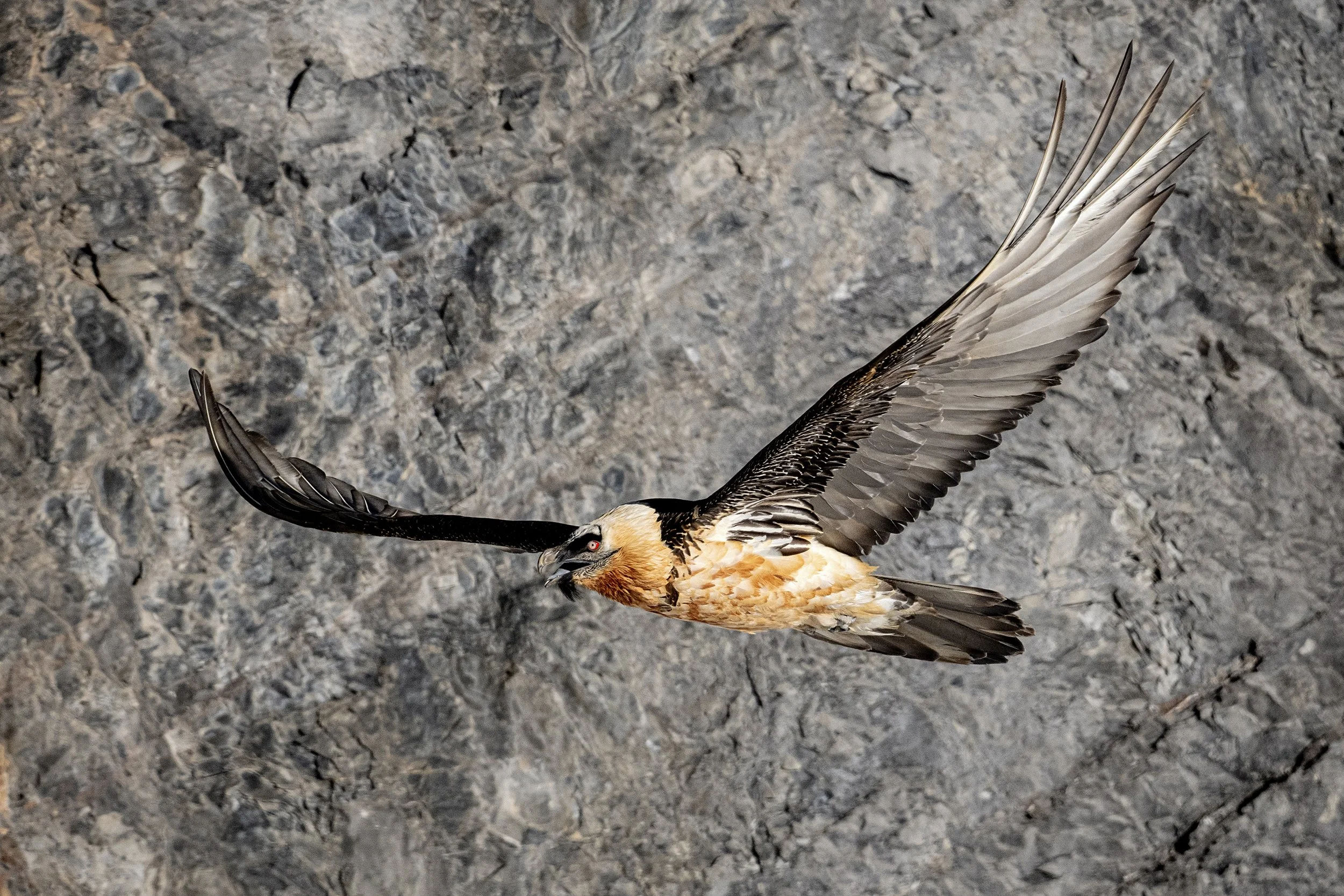
In the crystalline silence of the Valais peaks, an immense silhouette cleaves the azure sky. With a wingspan approaching 3 meters, the Bearded Vulture “Gypaetus barbatus” does not merely fly, it soars with an archaic nobility, reminiscent of a time when wild fauna resigned supreme over the Alpine arc.
However, this master of thermals has come a long way. Long victim of dark legends portraying it as a thief of lambs, even children, the “Bone Breaker” had completely disappeared from Switzerland at the beginning of the 20th century, Today, it’s return is considered one of the greatest conservation successes in Europe.
A Body Shape Sculpted for the Peaks.
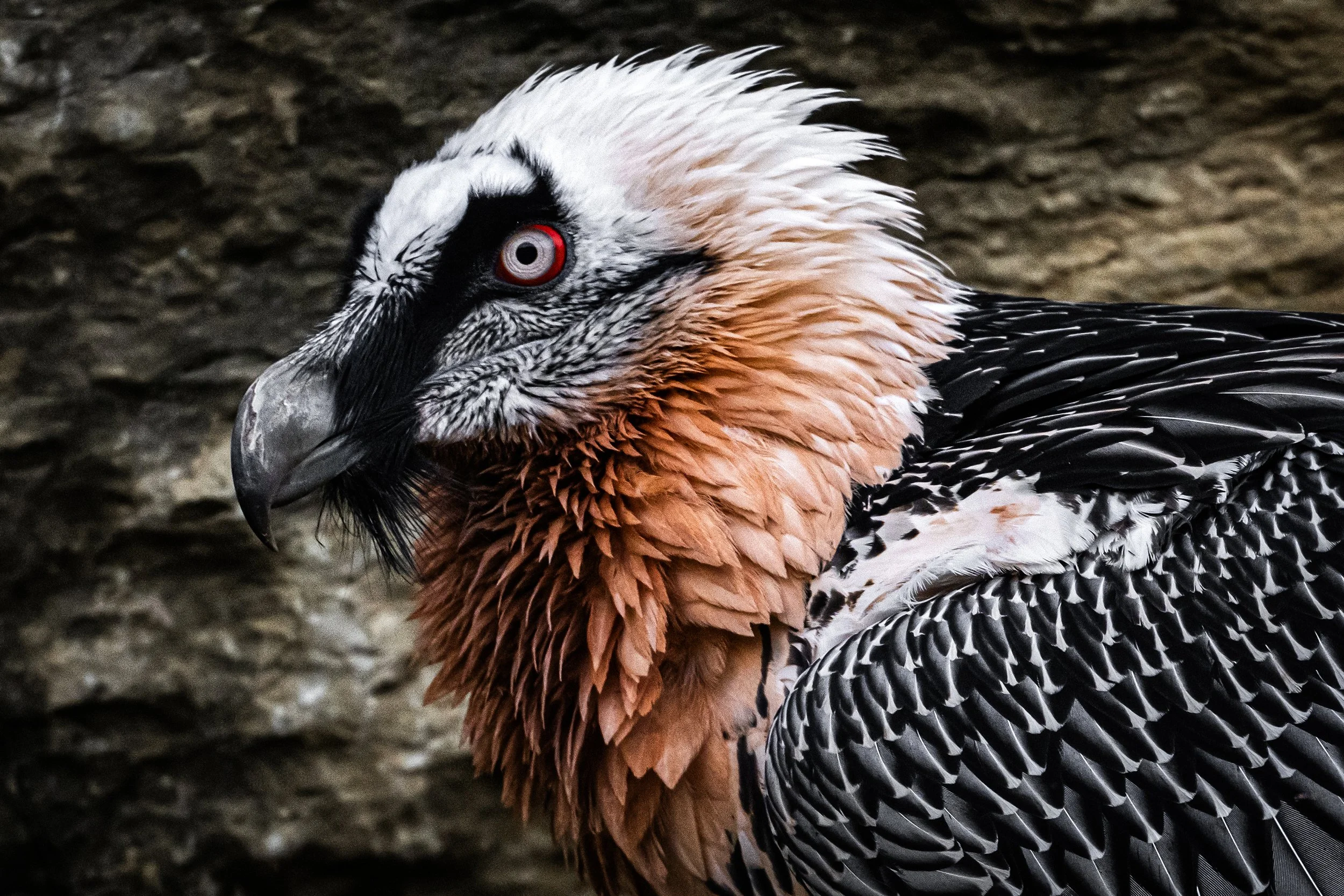
Unlike other vultures its head is entirely feathered, a necessity for withstanding the trash temperatures of hight altitudes in Switzerland, from Valais to Graubünden.
Its silhouette characterized by narrow wings and a wedge-shaped tails, gives it exceptional piloting skills, it is capable of exploiting the faintest thermals, skimming the rock faces with surgical precesion that even the most experienced paragliders observe with awe.
The most distinctive characteristic of the Bearded Vulture remains its diet. This “bone-breaker” occupies a unique trophic nice, it feeds on bone matter at 80%.
The Crash Flight.
When faced with a bone too large to swallow, the Gypaetus barbatus soars to a height of about 80 meters before dropping it onto targeted rocky, known as “anvils”. This learned behavior demonstrates advanced animal cognition.
Gastric Biochemistry.
Its stomach is a chemical reactor. With a pH close to 1.0, its gastric juices dissolve the mineral matrix to release proteins and none marrow, providing a colossal energy source in an environment where every calorie counts.
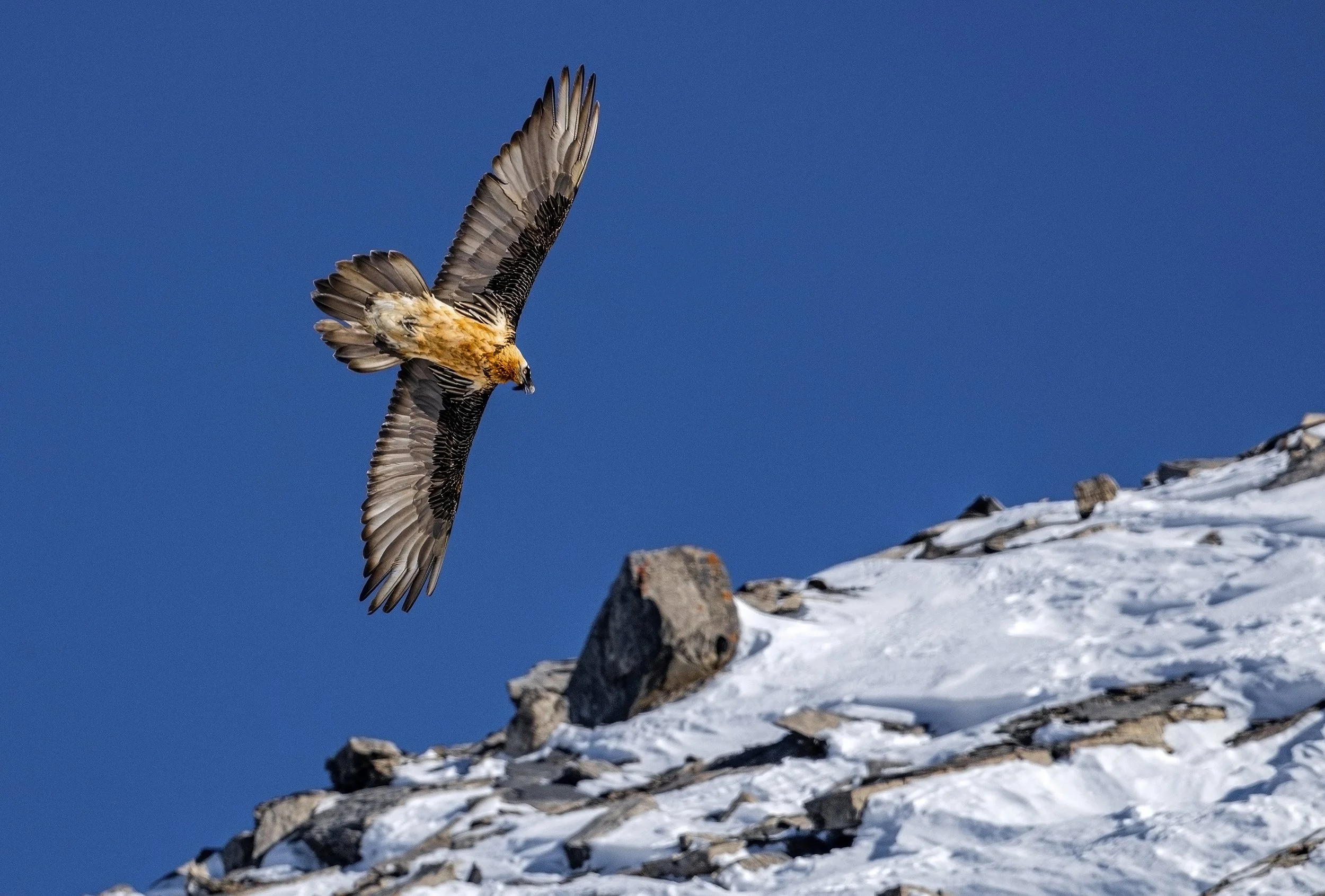
Valais Switzerland on 2024 ©Richard Juilliart
The Mystery of Ochre, A Cosmetic Ritual.
One of the biggest naturalist debates surrounding the species in Switzerland concerns its plumage. While the Bearded Vulture is naturally white on its underside, mature individuals display a striking iron-orange hue.
This isn’t a molt, but rather a deliberate transformation. The raptor actively seeks out water sources rich in iron oxides to bathe in. This behavior is interpreted as a sign of dominance, the more colorful the bird, the more demonstrates its ability to locate and defend scarce resources, a powerful signal to potential rivals in the fierce territorial competition of the Alps.
A Fragile Balance on the Roof of Europe.
The success of its reintroduction should not obscure the species vulnerability.
Late maturity: It only reproduces around the age of 7.
Limited fertility: Only one chick is raised per year, despite the frequent laying of two eggs.
Human-induced threats: Lead from hunting ammunition (causing lead poisoning) and disturbance from mountain tourism remain major challenges for the Pro Gypaète Foundation.
“ The Bearded Vulture does not survive in the mountains, it is one with them. Its disappearance was an amputation of our wild heritage. Its return is a promise of resilience.”
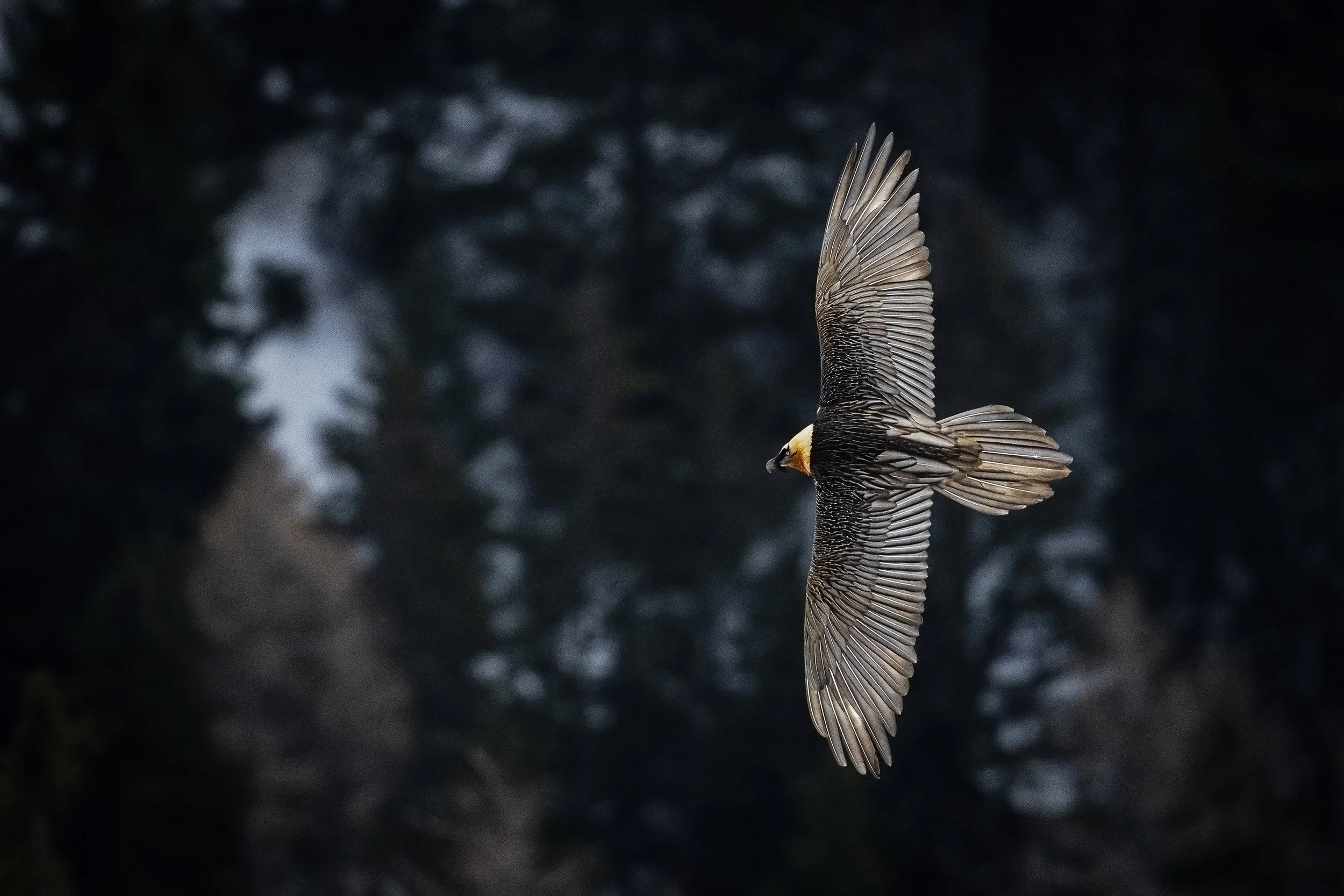
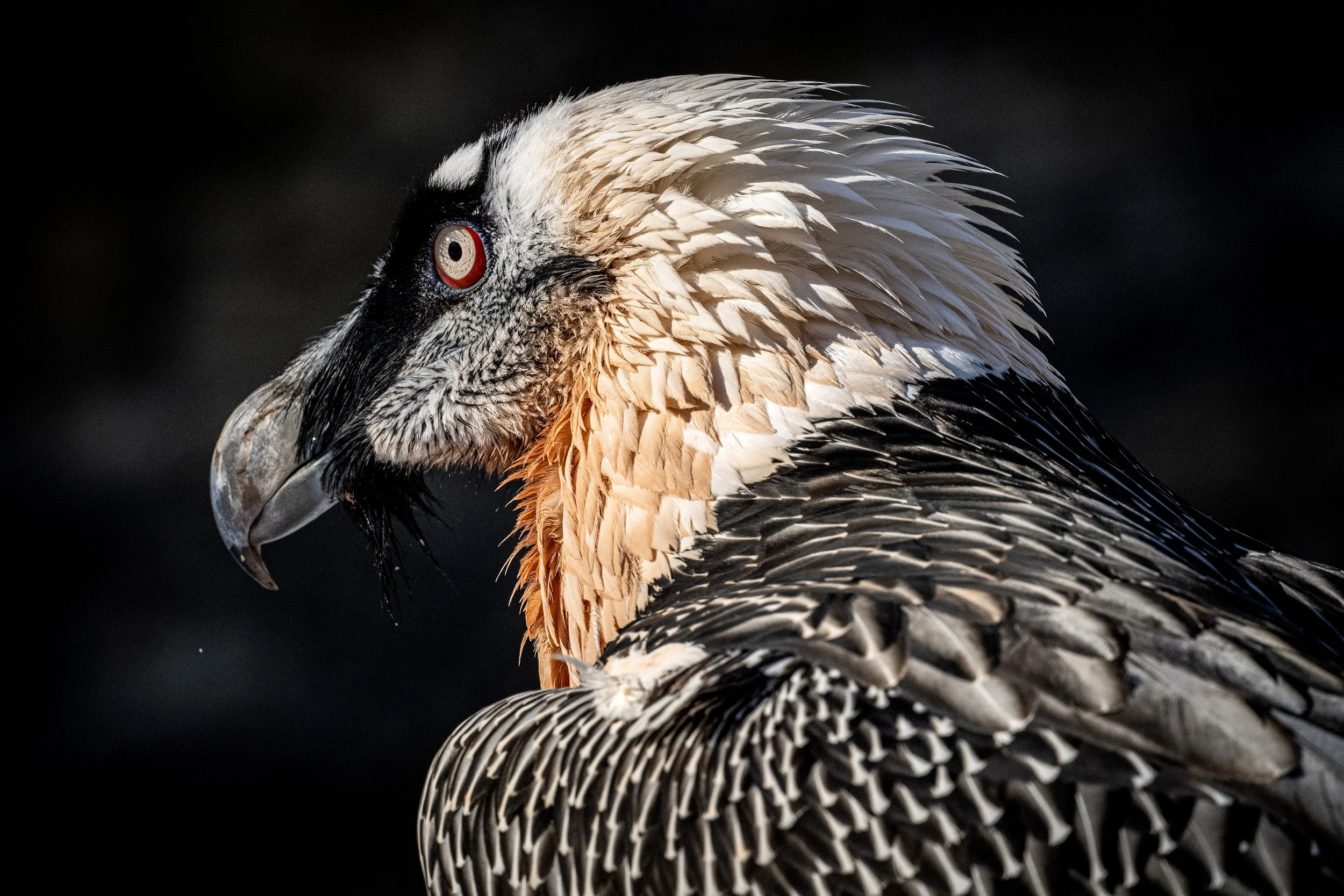
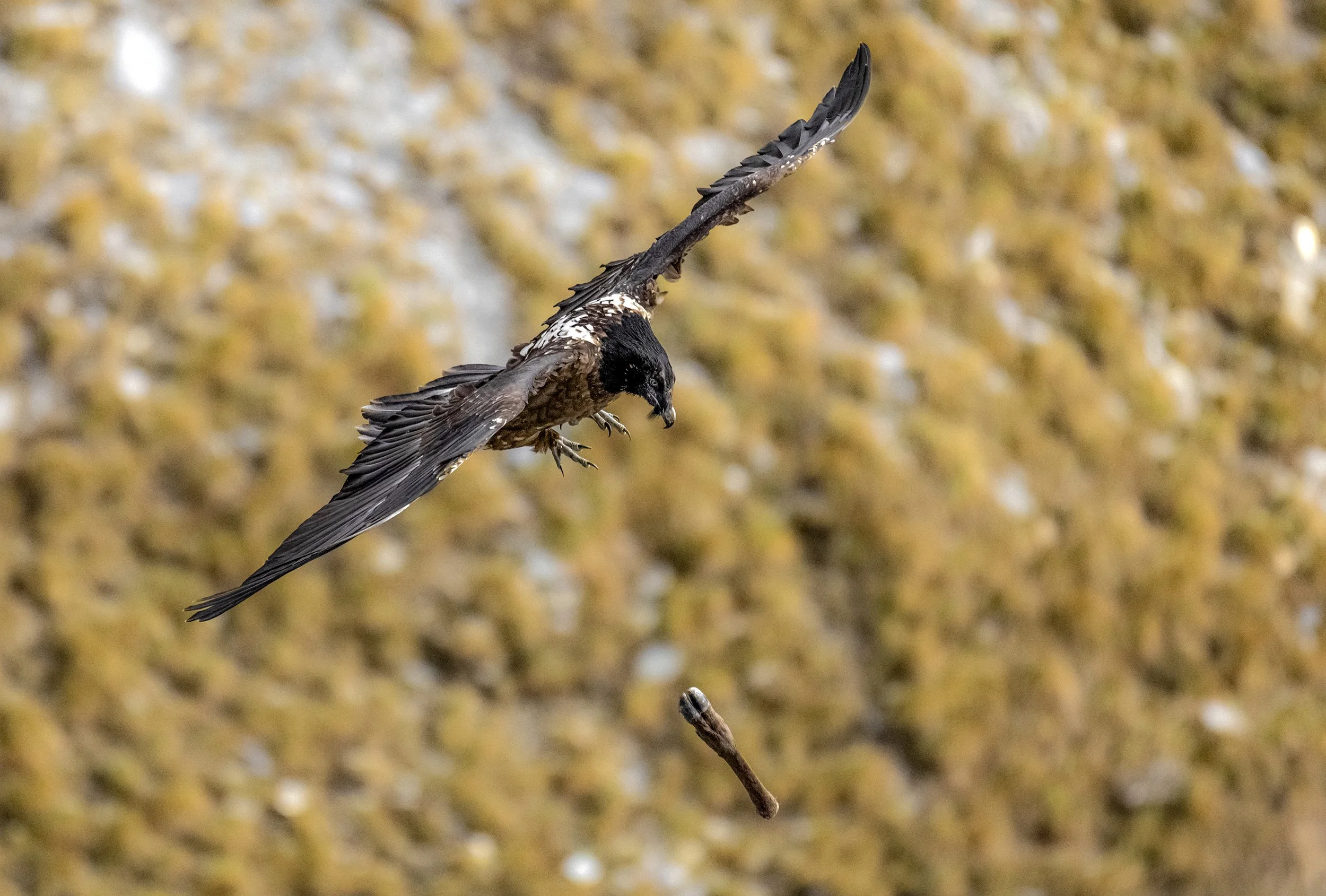
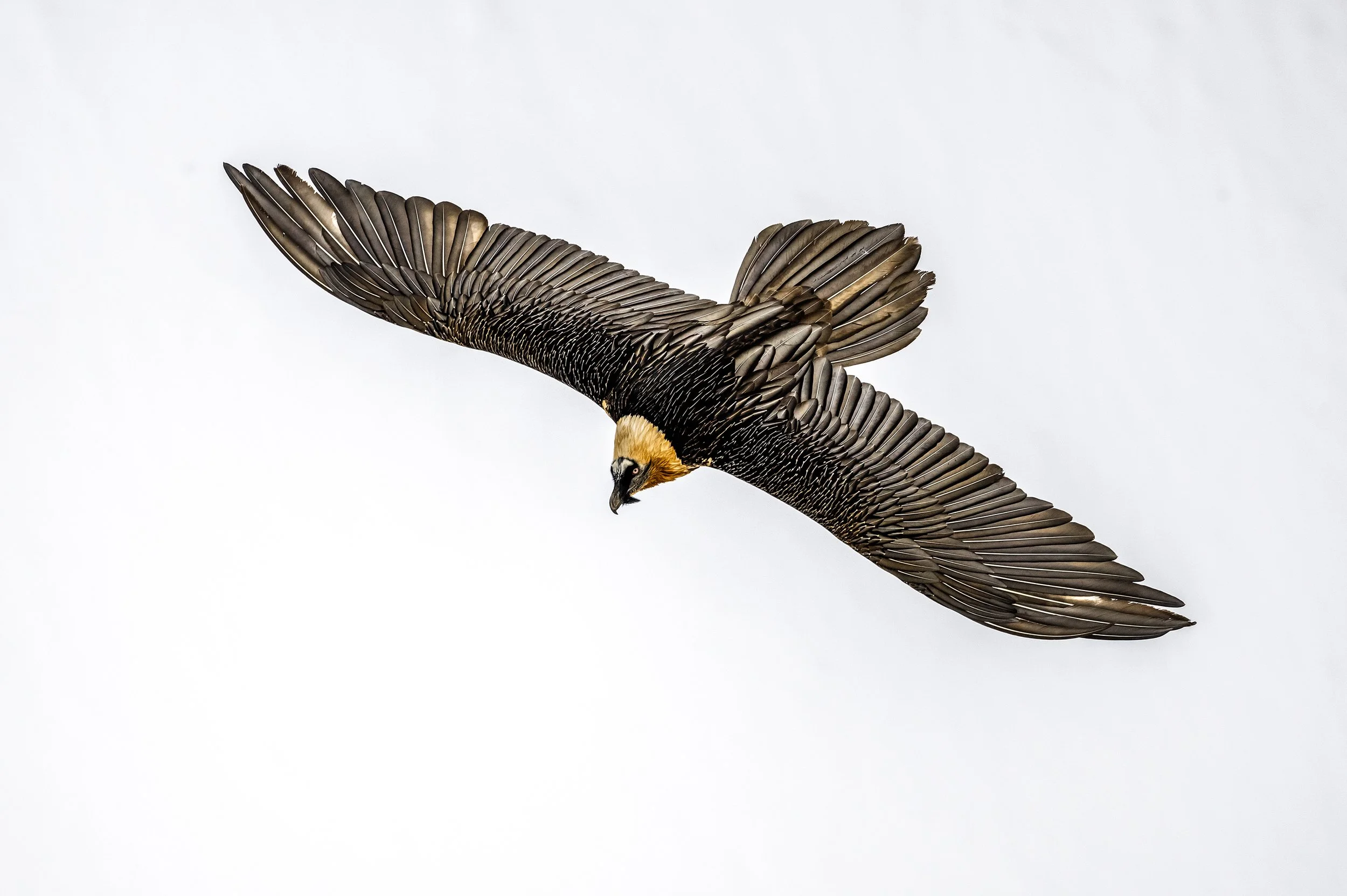
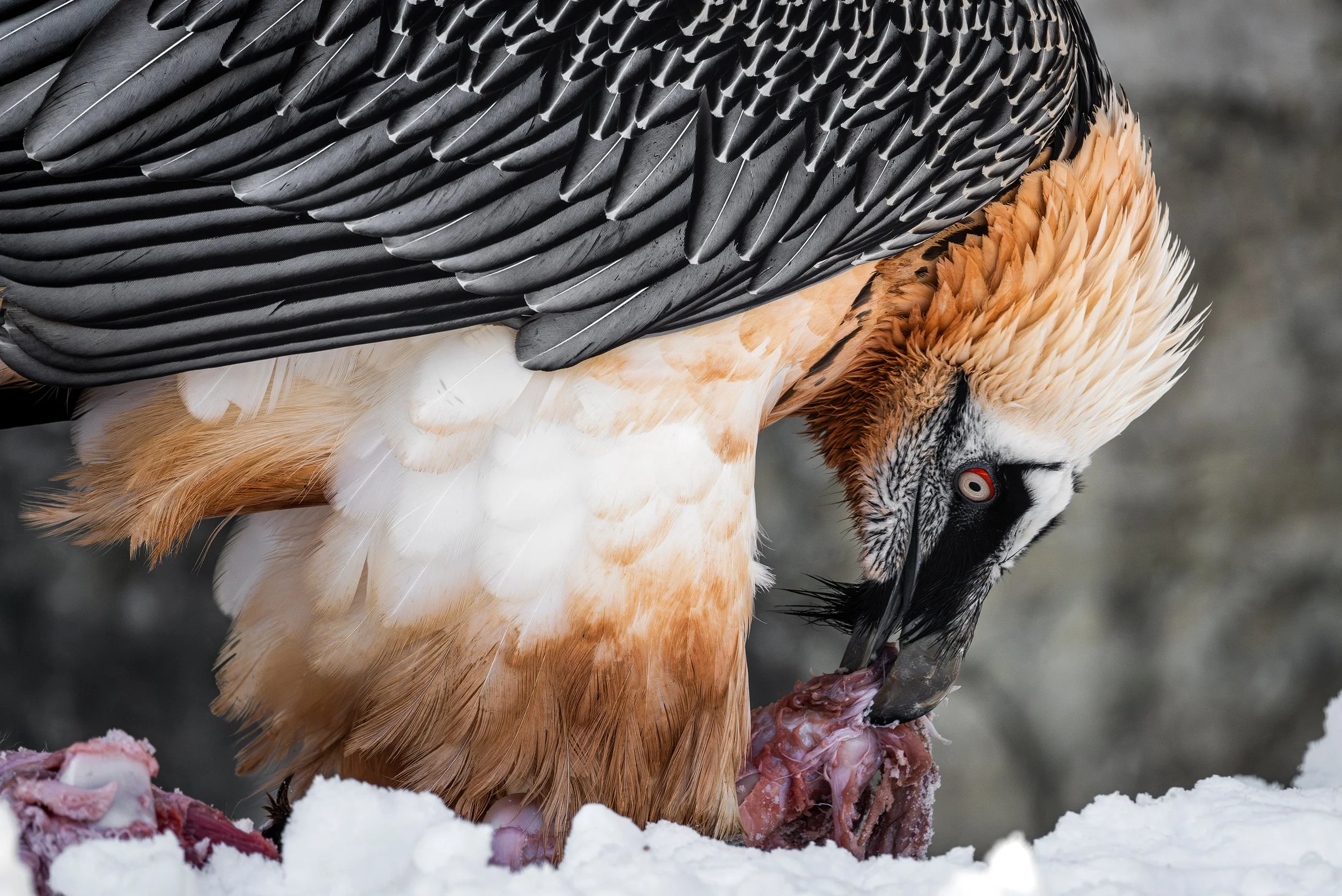
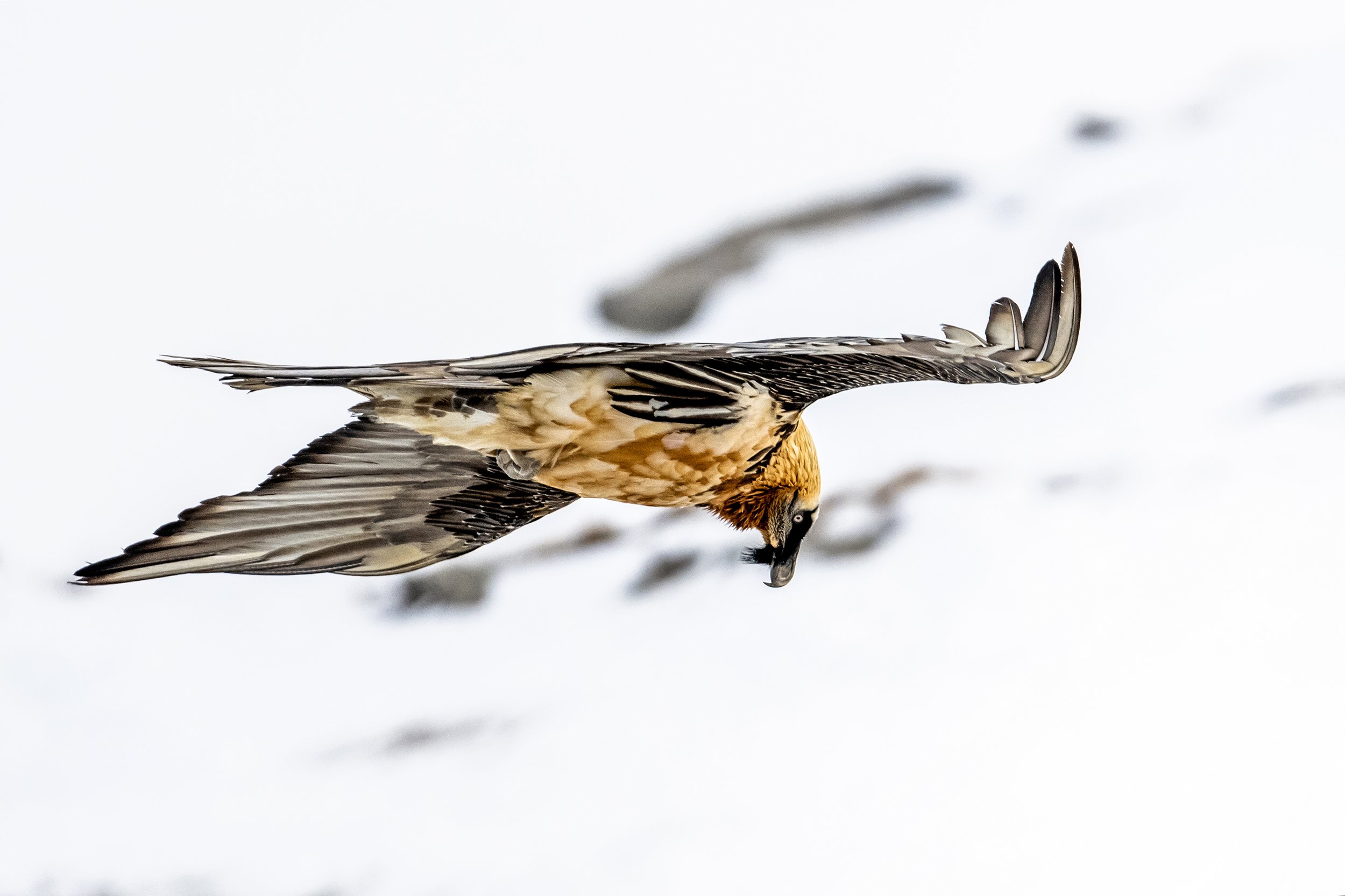
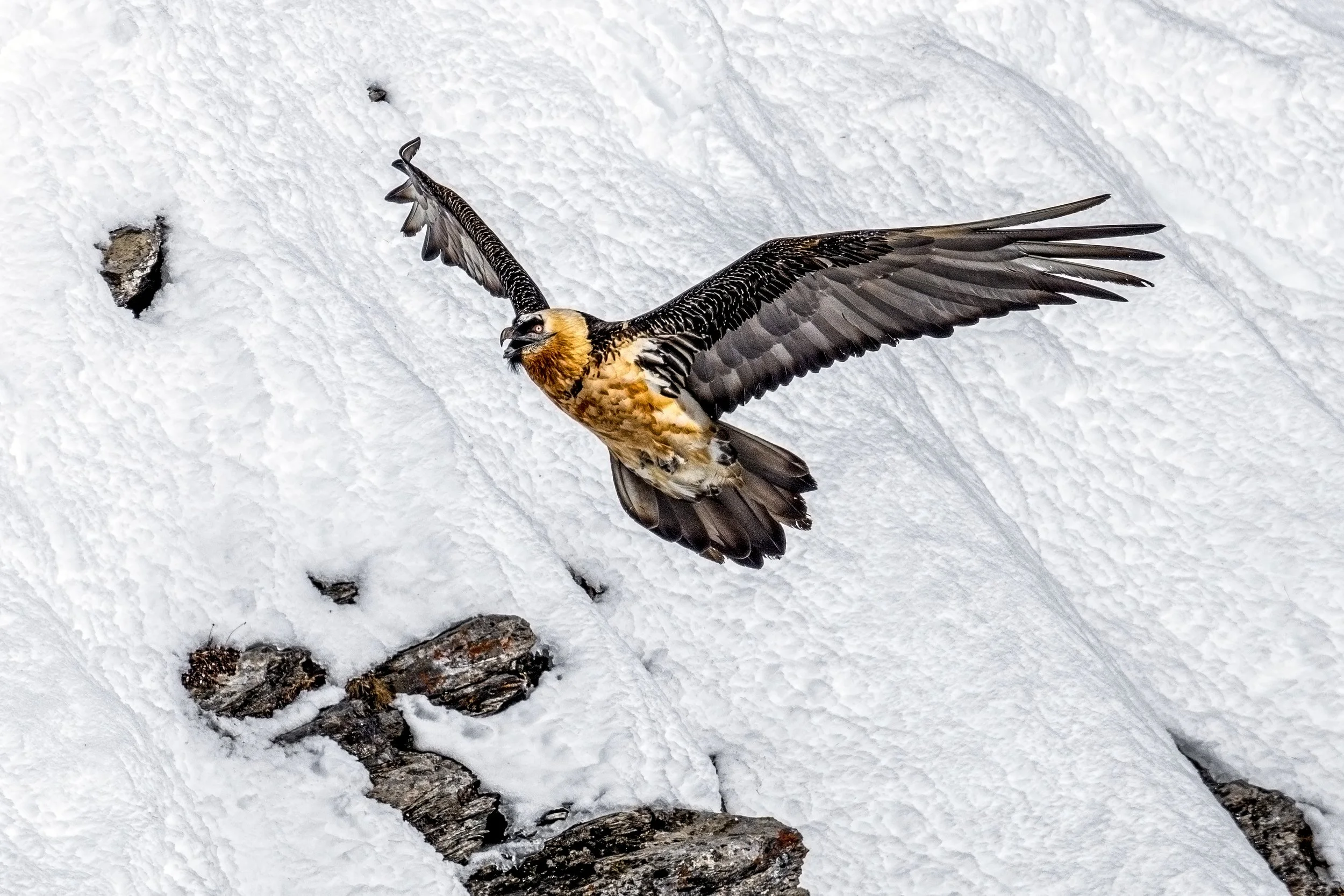
Valais Switzerland 2024 ©Richard Juilliart
Heritage.
Today, meeting the gaze of this giant, recognizable by its yellow iris ringed with red and the black tufts of feathers beneath its beak that give it its name, is almost a sacred experience. Switzerland through its strict conservation policies, has become a sanctuary for a species that remind us that the high mountains still possess their own kings, silents and eternals.
Should you be interested in meeting these remarkable individuals, I warmly invite you to attend my upcoming workshop in the Swiss Alps.